Jules-Arsène Garnier
~ 1847–1889
Jules-Arsène Garnier was a French painter, illustrator and engraver, born in Paris on 12 January 1847 and died there on 25 December 1889. A pupil of the celebrated academic master Jean-Léon Gérôme at the École des Beaux-Arts in Paris (after earlier studies in Toulouse), he made his debut at the Paris Salon in 1869 and exhibited regularly until the year of his death.
Garnier specialised in richly detailed historical and genre scenes, often set in the Middle Ages or Renaissance. He had a particular gift for anecdotal, dramatic and sometimes sensational subjects drawn from literature and popular tradition. He is especially remembered for his extensive series of illustrations (around 160 compositions) inspired by François Rabelais’s Gargantua and Pantagruel, works full of ribald humour, exuberance and earthy sensuality. An exhibition devoted solely to his Rabelais-inspired pictures was held in London shortly after his death.
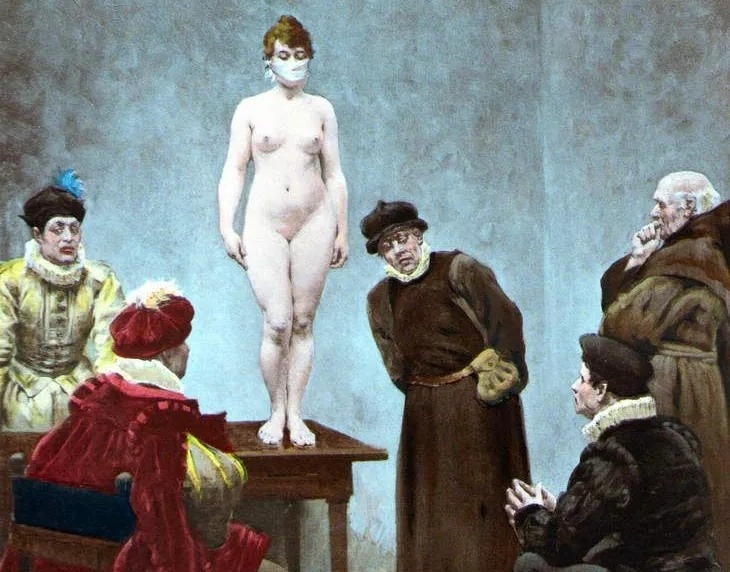
Among his better-known paintings are Le Droit du Seigneur (1872), which treats the legendary feudal “right of the lord,” and Le Supplice des Adultères (1876), a large Salon picture showing a naked couple publicly exposed and whipped before a medieval crowd as punishment for adultery. Other works explore themes of temptation, execution, orientalising drama and the female nude.
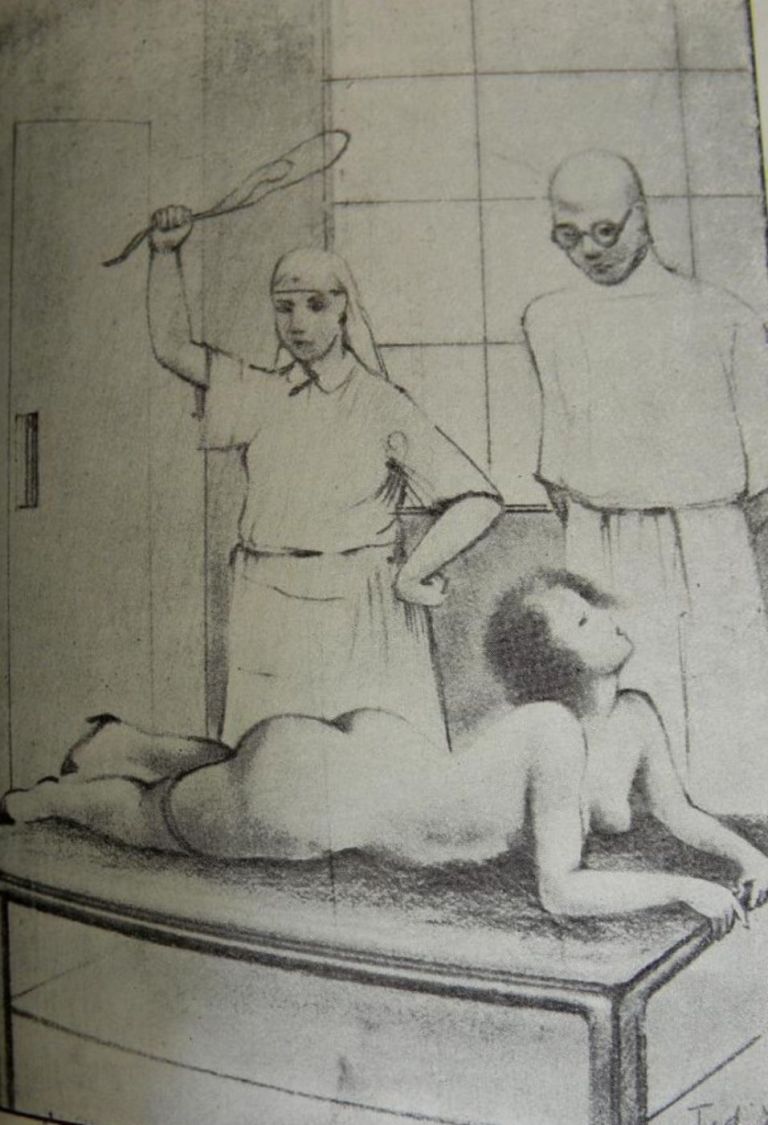
Viewed through a modern lens, several of Garnier’s paintings and illustrations contain clear resonances with BDSM aesthetics and power dynamics. Le Supplice des Adultères, with its forced public nudity, collective voyeurism and the imminent application of the whip, evokes classic elements of humiliation, exposure and consensual (or historically non-consensual) impact play. Le Droit du Seigneur stages an extreme hierarchical power imbalance and sexual submission. Scenes of judicial or inquisitorial punishment, such as a woman subjected to the boot (brodequins) before a tribunal, further explore restraint, suffering and institutional authority over the body. Even the more playful Rabelaisian compositions frequently revel in licentious bodily display and transgressive humour that can read as proto-erotic or fetishistic today.
While Garnier worked firmly within the academic and historical conventions of his time (aiming to illustrate moral, literary or anecdotal subjects rather than to create explicit erotica) the visual language he employed (public shame, corporal punishment, hierarchical domination and sensual display) makes many of his works particularly compelling for contemporary audiences interested in the historical roots of BDSM imagery and fantasy.
2 albums/16 artworks
Latest Update: August 14, 2026 -> New page created for this artist (16 artworks)