Posted in

Albert von Keller

~ 1844 - 1920

Albert von Keller was born on 27 April 1844 in the small Swiss town of Gais, in the canton of Appenzell, but he would spend most of his life in Munich and become one of the city’s best-loved painters. At the age of ten he moved there with his mother, and later trained at the Munich Academy of Fine Arts, where he absorbed the technical finesse and atmospheric sensitivity that would define his work.

He never chased the latest avant-garde trends. Instead, he stayed loyal to the traditions of the 19th century while quietly developing a style that felt fresh and personal. His portraits, intimate interior scenes, and psychologically charged figure studies are marked by a soft, glowing palette, subtle play of light, and a real feeling for the inner life of his subjects. Women appear again and again in his paintings, elegant, thoughtful, sometimes almost otherworldly and he had a special gift for capturing fleeting moods and emotions. A founding member of the Munich Secession in 1892, von Keller enjoyed considerable success during his lifetime. His work appeared in major exhibitions across Europe and even reached American collections. Collectors and critics appreciated the refinement of his brushwork and the way he could make an everyday moment feel quietly profound.

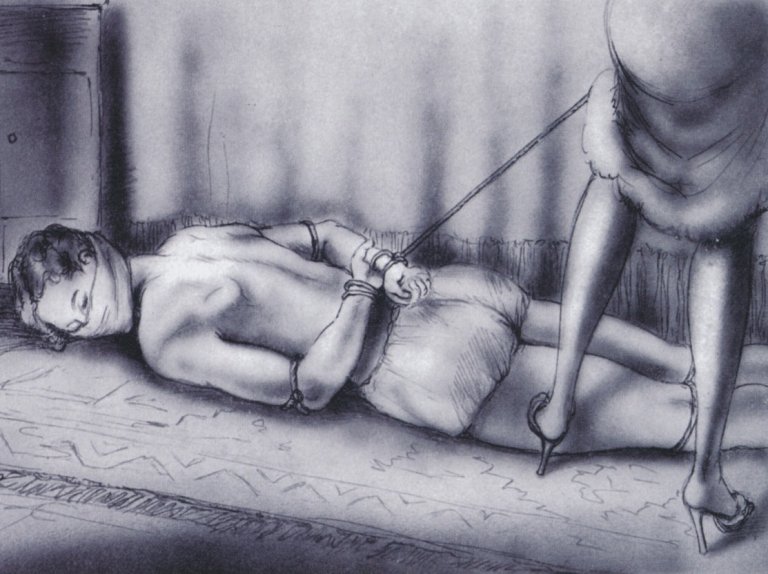
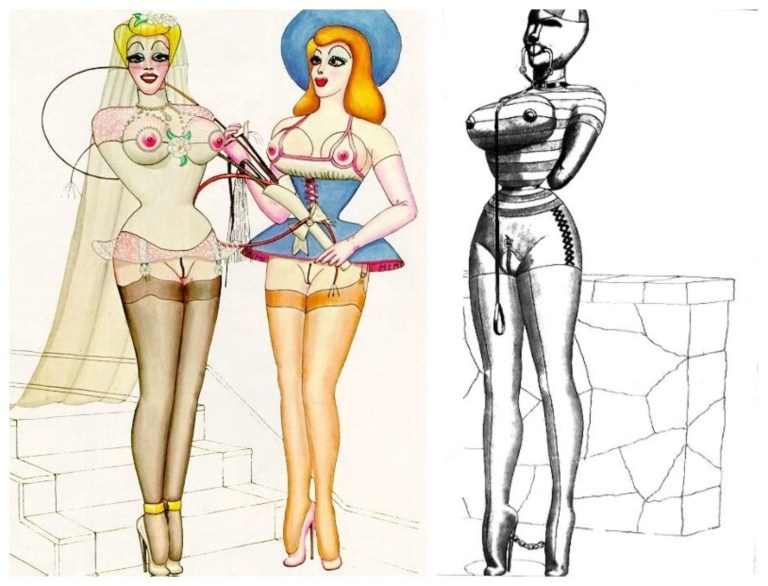
While Albert von Keller is best known for his luminous portraits and intimate genre scenes, a lesser-seen but compelling part of his oeuvre consists of rapid, expressive sketches exploring themes of suffering and spiritual ecstasy. In drawings from the later part of his career, he depicted female figures bound to columns or crosses (often in visionary or religious contexts) rendered with energetic, almost feverish pen strokes. These works, sometimes titled "Kreuzigungsvision" or "Die Marter," capture bodies in tension: arched backs, bound wrists, heads thrown back in pain or rapture. The bindings and poses evoke a sense of psychological and physical restraint, blending fin-de-siècle symbolism with a subtle erotic charge.

Though rooted in Christian iconography and the artist's interest in mysticism and the occult, these pieces stand apart from his more polished oil paintings. They reveal a rawer, more introspective side of Keller, one that probes the boundaries between suffering, surrender, and transcendence.

After a dramatic personal life, the early loss of his only son, and his wife’s death soon after, von Keller kept painting until the end. He died in Munich in July 1920.

3 albums/19 artworks
Latest Update: February 19, 2026 -> Created a new page for this artist (19 artworks)

To view premium content you need to login

Make sure that you are logged in as premium member to view and download all artworks. Select one of the options that applies to you:

Leave a Reply

Discover more from Vintage Bdsm Art

Subscribe now to keep reading and get access to the full archive.

Continue reading