
George Scholz
- 3 albums/10 artworks –
Georg Scholz (1890 – 1945) was a German painter, member of the New Objectivity movement. Scholz was born in Wolfenbüttel and had his artistic training at the Karlsruhe Academy, where his teachers included Hans Thoma and Wilhelm Trübner. He later studied in Berlin under Lovis Corinth.
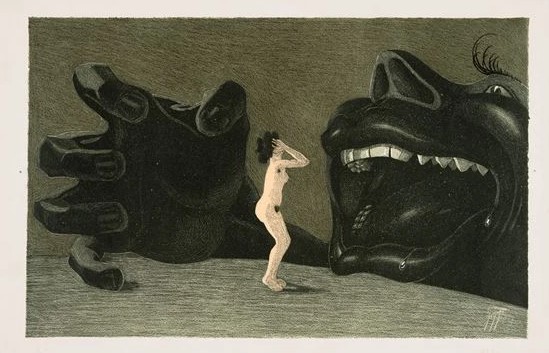
In 1919 Scholz became a member of the Communist Party of Germany, and his work of the next few years is harshly critical of the social and economic order in postwar Germany. Scholz quickly became one of the leaders of the New Objectivity, a group of artists who practiced a cynical form of realism. The most famous among this group are Max Beckmann, George Grosz and Otto Dix, and Scholz’s work briefly vied with theirs for ferocity of attack. By 1925, however, his approach had softened into something closer to neoclassicism.
In 1925, he was appointed a professor at the Baden State Academy of Art in Karlsruhe, where his students included Rudolf Dischinger. Scholz began contributing in 1926 to the satirical magazine Simplicissimus, and in 1928 he visited Paris where he especially appreciated the work of Bonnard.
With the rise to power of Hitler and the National Socialists in 1933, Scholz was quickly dismissed from his teaching position. Declared a Degenerate Artist, his works were among those seized in 1937 as part of a campaign by the Nazis to “purify” German culture, and he was forbidden to paint in 1939.
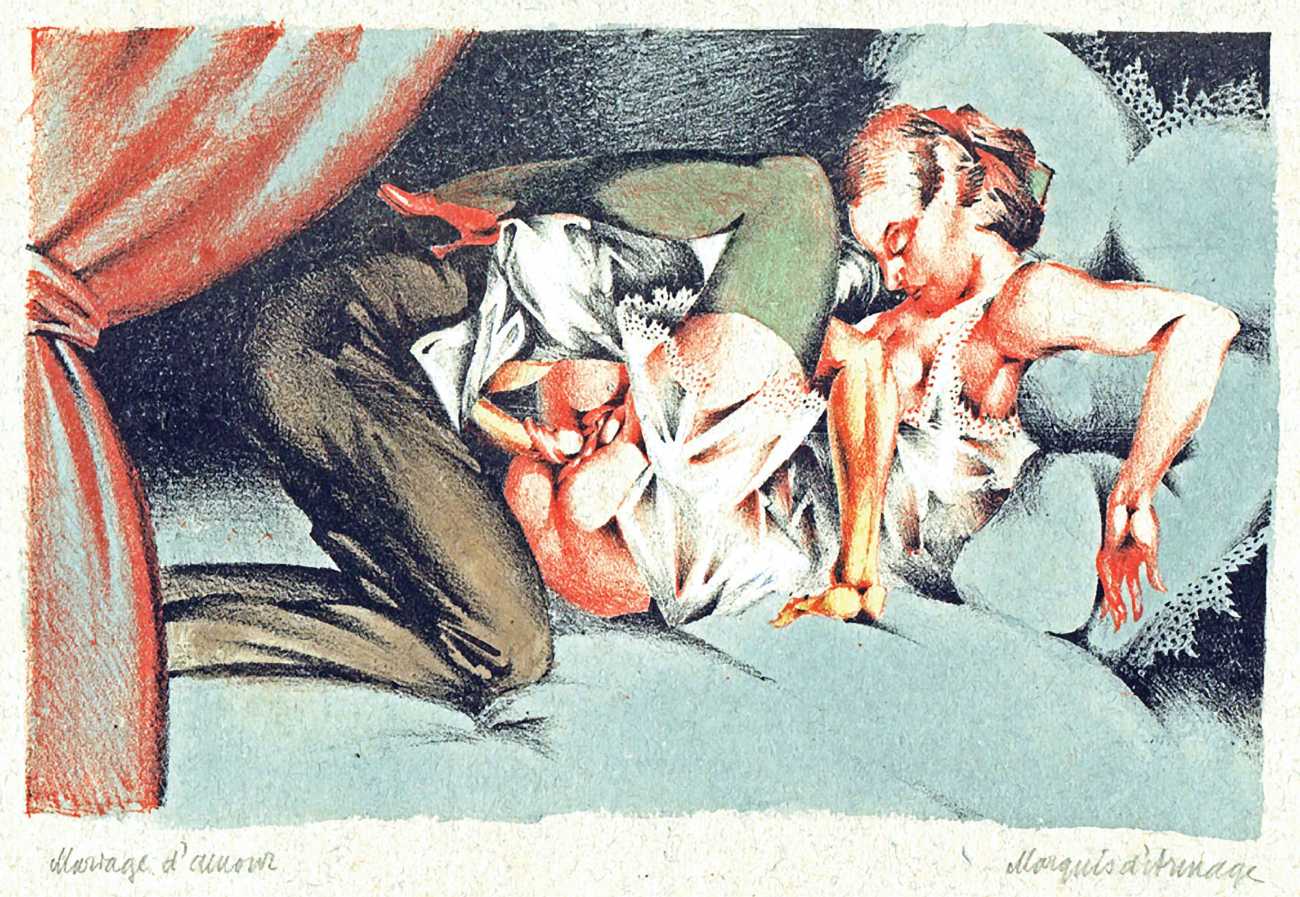
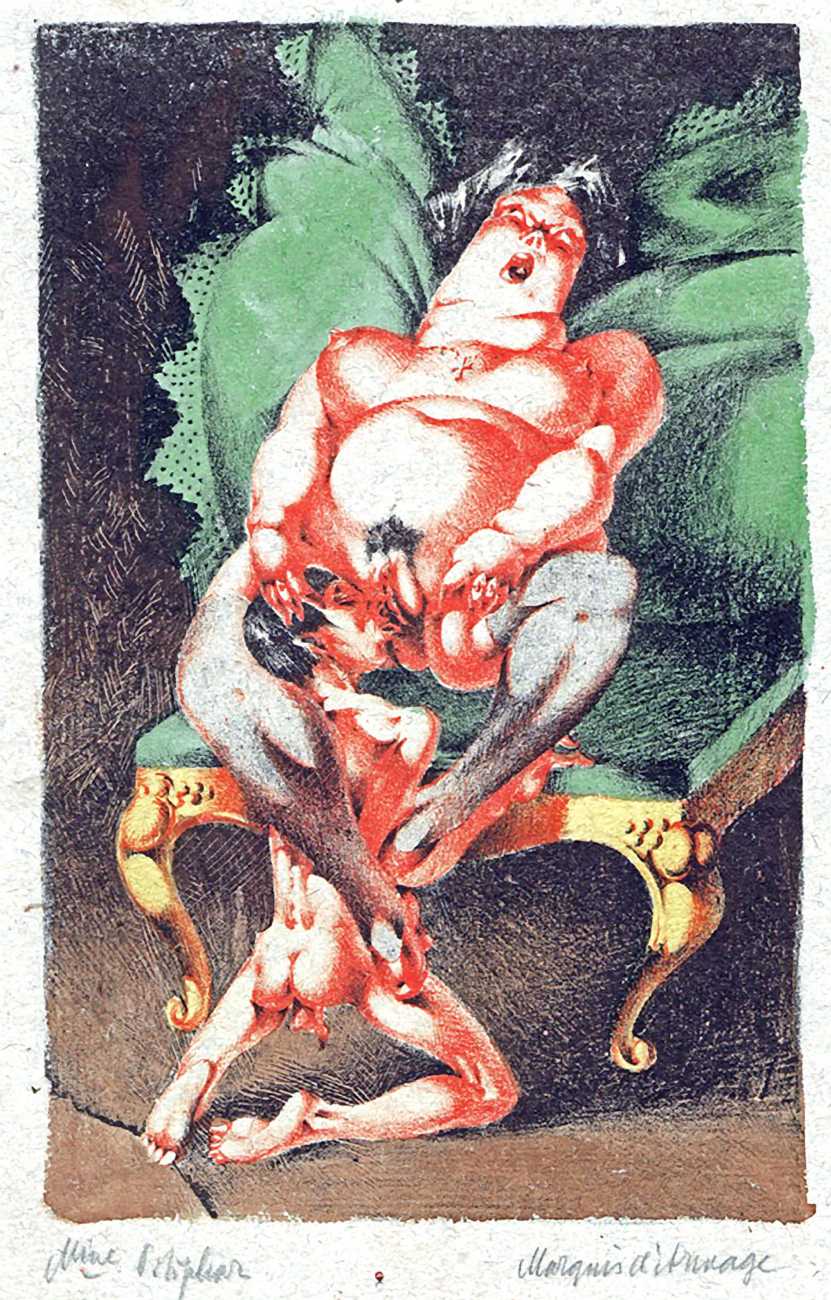
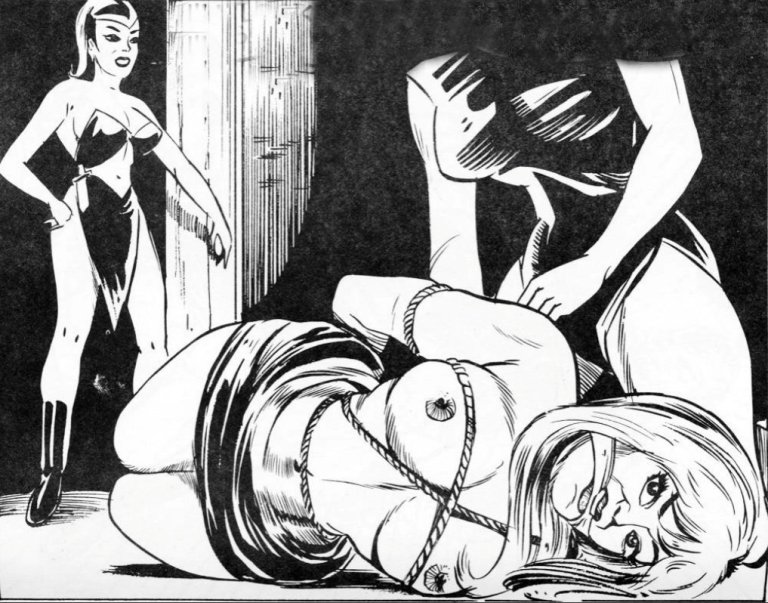
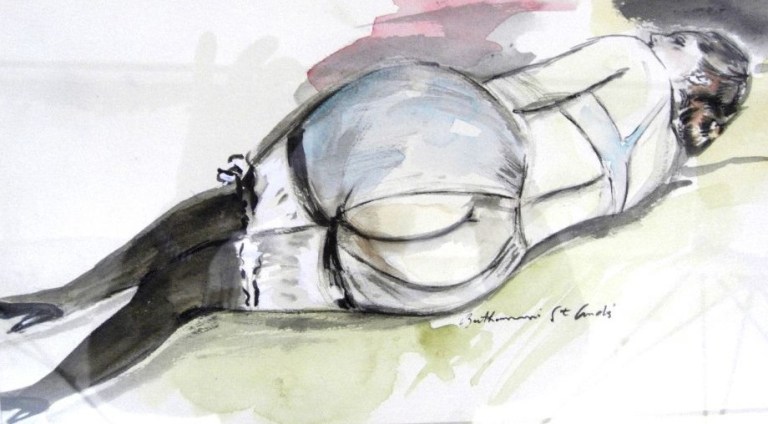
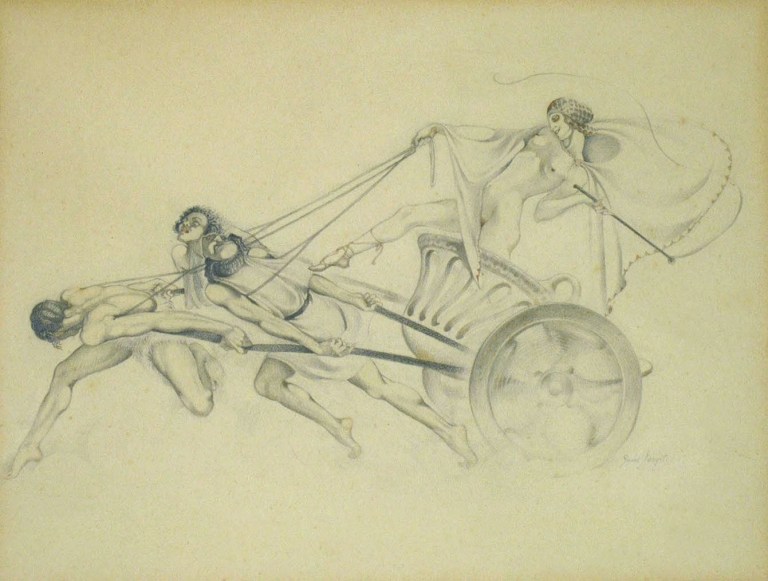
In the early 1920s, Georg Scholz created a series of drawings and prints exploring sexual themes, capturing this facet of human experience with raw, unfiltered detail. His only known erotic portfolio consists of nine color prints, mysteriously signed “Marquis d’Aunage.” The term “Aunage,” an old French word for “adjustment” or “correction,” suggests “The Marquis of Correction,” aligning with the sadomasochistic themes of the series. Additionally, in German, “d’Aunage” phonetically resembles “Darm-Arsch” (gut-arse), a fitting double entendre. Scholz likely intended this dual meaning. The use of French signatures and titles was a common tactic among German erotic artists of the era to evade potential legal repercussions.
In 1945, the French occupation forces appointed Scholz mayor of Waldkirch, but he died that same year, in Waldkirch.
Featured in gallery below:
- Marquis d’Aunage (1922)




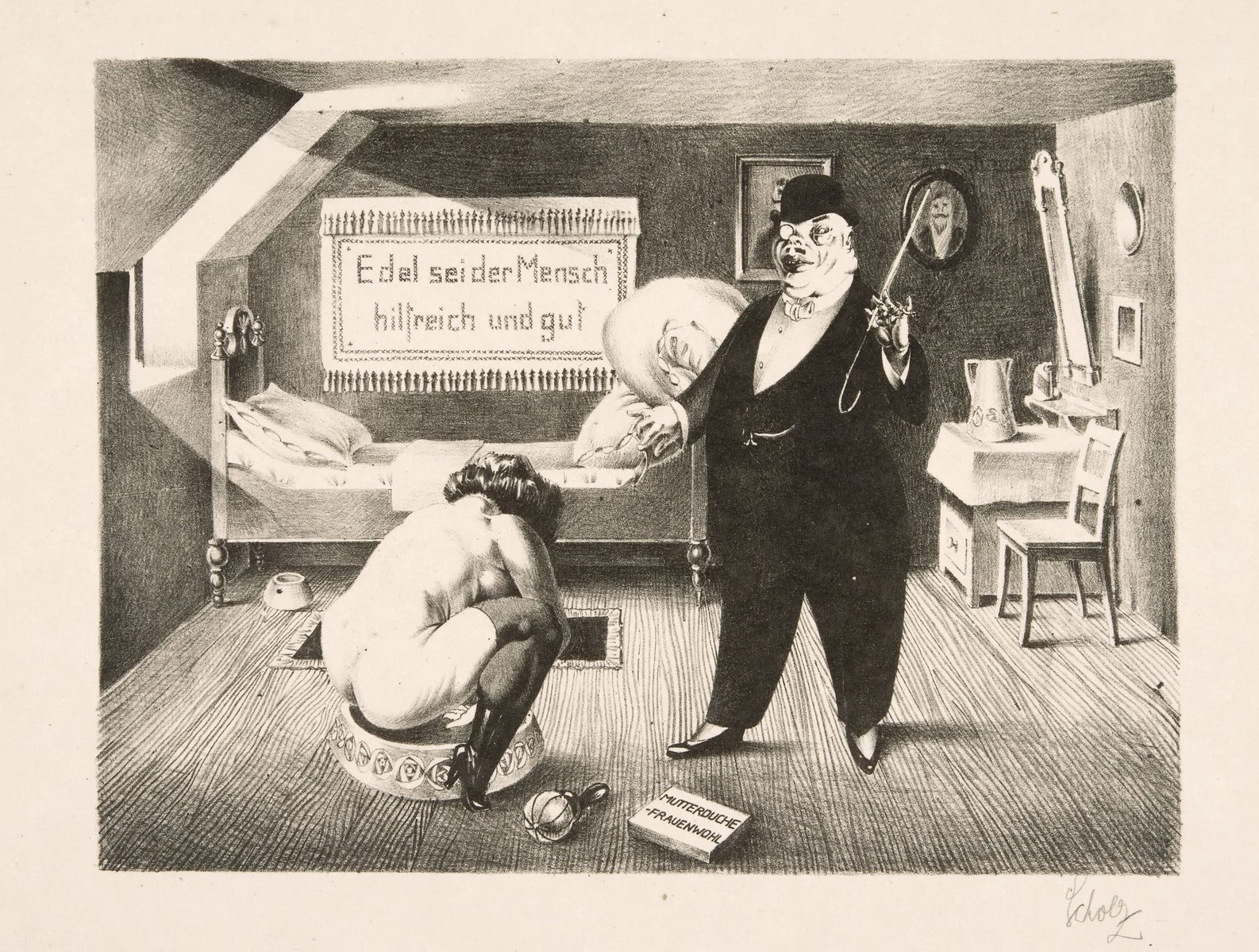



As ever, another interesting piece: thank you for it. These are powerful images – especially the first one (which happens to press some of my personal buttons). Interesting, too, to see the Goethe quote on the wall in the second Golden Shower image – no doubt put there in a spirit of irony.
Thanks Stephen. I was truly surprised when putting together this small, but special, collection. Yes I think irony was something Scholz used in his art. Hopefully I will find more art to add.